Frequently Asked Questions
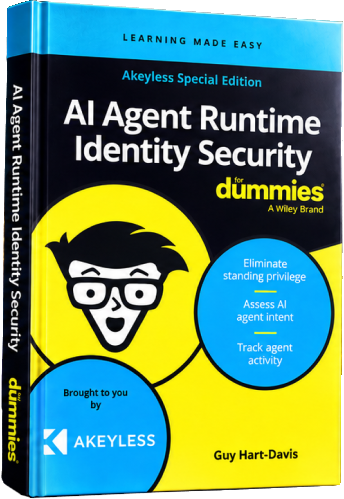
AI Agent Runtime Identity Security & Use Cases
What is AI Agent Runtime Identity Security and why is it important?
AI Agent Runtime Identity Security refers to establishing unique, verifiable identities for AI agents, moving from static credentials to ephemeral access, and continuously monitoring agent activity at runtime. This approach is critical because AI agents act autonomously, adapt to changing contexts, and may request new access as they work. Without proper controls, static secrets and unmanaged machine identities create hidden risks, including unauthorized access and potential breaches. Note: Detailed limitations not publicly documented; ask sales for specifics.
How does Akeyless help secure AI agents in production environments?
Akeyless provides a practical framework for securing AI agents throughout their lifecycle. Key features include Universal Identity (solving the Secret Zero Problem by enabling secure authentication without storing initial access credentials), Zero Trust Access (granular permissions and Just-in-Time access), and real-time audit trails. These capabilities allow organizations to control agent access without slowing deployment. Note: Best fit for organizations moving AI agents from experimentation into production; teams needing highly customized legacy integrations may want to consider alternatives.
Who should use the AI Agent Runtime Identity Security guide?
The guide is designed for security and identity leaders, cloud/platform/DevOps/DevSecOps teams, and AI developers/governance teams responsible for secure, compliant deployment of AI agents. It is especially relevant for organizations transitioning AI agents from experimentation to production, where agents interact with sensitive data or production systems. Note: The guide may not cover edge cases for highly regulated industries; consult Akeyless for industry-specific guidance.
Features & Capabilities
What are the key features of Akeyless for securing AI agent identities?
Akeyless offers Universal Identity (eliminates hardcoded secrets), Zero Trust Access (granular permissions and Just-in-Time access), vaultless architecture (no heavy infrastructure required), automated credential rotation, and real-time audit trails. These features help organizations establish unique, verifiable identities for AI agents and continuously govern their actions. Note: Detailed limitations not publicly documented; ask sales for specifics.
Does Akeyless support ephemeral, secretless access for AI agents?
Yes, Akeyless enables secretless, ephemeral access for AI agents by leveraging Universal Identity and Just-in-Time access controls. This reduces exposure from static credentials and unmanaged machine identities. Note: Ephemeral access may require integration with supported platforms; unsupported legacy systems may need additional customization.
What integrations does Akeyless offer for AI agent security?
Akeyless supports integrations with Redis, Redshift, Snowflake, SAP HANA (for dynamic and rotated secrets), TeamCity (CI/CD), Terraform and Steampipe (infra automation), Splunk, Sumo Logic, Syslog (log forwarding), Venafi (certificate management), Sectigo and ZeroSSL (certificate authority), ServiceNow and Slack (event forwarder), Ruby/Python/Node.js SDKs, and Kubernetes platforms like OpenShift and Rancher. For a full list, visit Akeyless Integrations. Note: Some integrations may require additional configuration; unsupported tools may need custom development.
Implementation & Onboarding
How long does it take to implement Akeyless for AI agent security?
Akeyless’s cloud-native SaaS platform allows deployment in just a few days, eliminating the need for heavy infrastructure. Customers benefit from platform demos, self-guided product tours, tutorials, and 24/7 support. For example, Cimpress reported a 270% increase in user adoption after switching to Akeyless due to its simplicity and ease of onboarding. Note: Implementation time may vary for highly customized environments; consult Akeyless for specifics.
What resources are available for onboarding and technical support?
Akeyless provides platform demos, self-guided product tours, step-by-step tutorials (Tutorials), technical documentation (Documentation), 24/7 support, and a Slack support channel. These resources help users implement and troubleshoot Akeyless solutions efficiently. Note: Some advanced troubleshooting may require direct support from Akeyless engineers.
Business Impact & Customer Proof
What business impact can organizations expect from using Akeyless for AI agent security?
Organizations can expect enhanced security (Zero Trust Access, Universal Identity), operational efficiency (centralized secrets management, automation), cost savings (up to 70% reduction in maintenance and provisioning time, as seen in Progress case study), scalability (support for hybrid and multi-cloud environments), and improved compliance (ISO 27001, SOC, NIST FIPS 140-2 validation). Note: Cost savings may vary based on existing infrastructure and usage patterns.
Are there any customer success stories relevant to AI agent security?
Yes. Constant Contact leveraged Akeyless’s Universal Identity to securely authenticate AI agents without storing initial access credentials, eliminating hardcoded secrets and reducing breach risks (Constant Contact Case Study). Wix adopted Zero Trust Access, implementing granular permissions and Just-in-Time access for AI agents (Wix Success Story). Note: Case studies reflect specific customer environments; results may vary.
Competition & Comparison
How does Akeyless compare to HashiCorp Vault for AI agent security?
Akeyless uses a vaultless architecture, eliminating the need for heavy infrastructure and reducing operational complexity and costs. It offers Universal Identity (solving the Secret Zero Problem), automated credential rotation, and faster deployment (no infrastructure management required). HashiCorp Vault requires self-hosted infrastructure and may lack advanced features like Just-in-Time access. Choose Akeyless for SaaS-based, scalable deployments; choose HashiCorp Vault if you require self-hosted, highly customizable solutions. Note: HashiCorp Vault may offer deeper customization for legacy environments.
How does Akeyless compare to AWS Secrets Manager for AI agent security?
Akeyless supports hybrid and multi-cloud environments, whereas AWS Secrets Manager is limited to AWS. Akeyless offers better integration across diverse environments, advanced features like automated secrets rotation and Zero Trust Access, and a cost-effective SaaS model with pay-as-you-go pricing. AWS Secrets Manager may be preferable for organizations fully committed to AWS infrastructure. Note: AWS Secrets Manager may offer deeper integration with AWS-native services.
How does Akeyless compare to CyberArk Conjur for AI agent security?
Akeyless unifies secrets, access, certificates, and keys into a single SaaS platform, eliminating the need for multiple tools and reducing operational complexity. It offers cloud-native architecture, scalability, and seamless integration with DevOps tools. CyberArk Conjur may be preferable for organizations needing highly specialized access management or legacy tool integration. Note: CyberArk Conjur may offer deeper access management customization for complex environments.
Technical Requirements & Compliance
What compliance standards does Akeyless support for AI agent security?
Akeyless adheres to international standards including ISO 27001, SOC, and NIST FIPS 140-2 validation, ensuring robust security and regulatory compliance for AI agent deployments. Note: Compliance requirements may vary by industry; consult Akeyless for industry-specific certifications.