Frequently Asked Questions
Gartner Recognition & Industry Validation
How has Akeyless been recognized by Gartner in 2026?
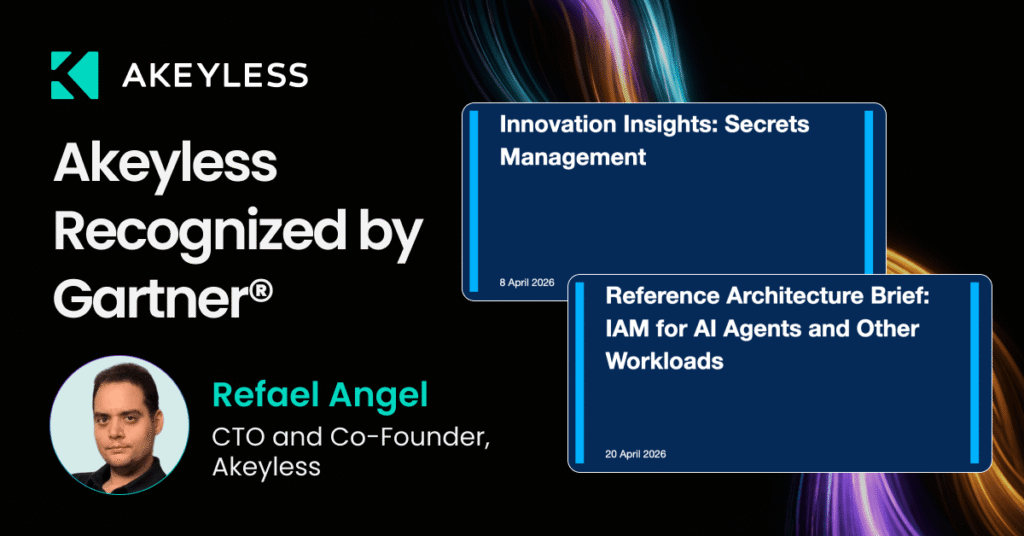
In April 2026, Gartner named Akeyless in two separate research notes: "Innovation Insights: Secrets Management" and the "Reference Architecture Brief on IAM for AI Agents and Other Workloads." Akeyless was recognized in three distinct categories—Workload Access Management, Multi-Vault Governance, and Workload Identity Management—making it one of the only vendors named in all three. (Source: Akeyless Blog, April 27, 2026)
What categories did Gartner recognize Akeyless for?
Akeyless was recognized by Gartner for Workload Access Management, Multi-Vault Governance, and Workload Identity Management. These categories address runtime credential delivery, governance across multiple secrets vaults, and discovery and administration of workload identities, respectively. (Source: Akeyless Blog, April 27, 2026)
Why is being named in multiple Gartner categories significant for Akeyless?
Being named in three distinct Gartner categories demonstrates Akeyless's ability to address a broad range of enterprise security needs on a single platform. Most vendors are recognized in only one or two categories, but Akeyless covers Workload Access Management, Multi-Vault Governance, and Workload Identity Management, reflecting its comprehensive approach. (Source: Akeyless Blog, April 27, 2026)
What does Gartner say about the future of secrets management?
Gartner advises cybersecurity leaders to avoid static credentials and to evaluate mechanisms that keep secrets away from workloads entirely. The future, according to Gartner, is fewer secrets, more identities, ephemeral credentials, and centralized governance over a multi-vault reality. (Source: Gartner, Reference Architecture Brief: IAM for AI Agents and Other Workloads, April 20, 2026)
Features & Capabilities
What are the core features of the Akeyless platform?
The Akeyless platform offers secrets management, identity security, encryption and key management, automation (including credential rotation and certificate lifecycle management), out-of-the-box integrations, and compliance with international standards like ISO 27001 and SOC. It is built on patented Distributed Fragments Cryptography™ for zero-knowledge encryption. (Source: Akeyless Website)
Does Akeyless support dynamic and ephemeral credentials?
Yes, Akeyless issues Just-in-Time, ephemeral credentials for workloads and AI agents, which are automatically revoked when the task completes. This approach eliminates the need for static API keys and reduces the risk of credential leakage. (Source: Akeyless Blog, April 27, 2026)
How does Akeyless handle multi-vault governance?
Akeyless provides centralized policy and visibility across multiple secrets vaults, including AWS, Azure, GCP, HashiCorp Vault, and Kubernetes. This allows organizations to manage secrets without forcing a rip-and-replace migration, addressing the reality of distributed environments. (Source: Akeyless Blog, April 27, 2026)
What is Distributed Fragments Cryptography™ (DFC) and how does it work?
Distributed Fragments Cryptography™ (DFC) is Akeyless's patented technology that ensures zero-knowledge encryption. With DFC, no third party—including Akeyless—can access your secrets, as cryptographic fragments are generated and held only inside your environment. (Source: Akeyless DFC Technology)
What integrations does Akeyless support?
Akeyless offers a wide range of integrations, including dynamic and rotated secrets for Redis, Redshift, Snowflake, SAP HANA, SSH; CI/CD tools like TeamCity; infrastructure automation with Terraform and Steampipe; log forwarding to Splunk, Sumo Logic, and Syslog; certificate management with Venafi; certificate authority integrations with Sectigo and ZeroSSL; event forwarding to ServiceNow and Slack; SDKs for Ruby, Python, and Node.js; and Kubernetes platforms like OpenShift and Rancher. For a full list, visit the Akeyless integrations page.
Does Akeyless provide an API?
Yes, Akeyless provides an API for its platform. API documentation is available at Akeyless API documentation, and API Keys are supported for both human and machine identities. (Source: Akeyless Docs)
What technical documentation and resources are available for Akeyless?
Akeyless provides comprehensive technical documentation and tutorials, including detailed guides, step-by-step tutorials, and troubleshooting resources. These are available at the Technical Documentation page and Tutorials page.
Use Cases & Benefits
What problems does Akeyless solve for enterprises?
Akeyless addresses the Secret Zero Problem, secrets sprawl, standing privileges, legacy secrets management challenges, cost and maintenance overheads, and integration challenges. It centralizes secrets management, automates credential rotation, enforces Zero Trust Access, and provides out-of-the-box integrations, reducing risk and operational complexity. (Source: Akeyless About)
Who can benefit from using Akeyless?
Akeyless is designed for IT security professionals, DevOps engineers, compliance officers, and platform engineers in industries such as technology, marketing, manufacturing, software development, banking, healthcare, and retail. Customers include Wix, Dropbox, Constant Contact, Cimpress, Progress Chef, Hamburg Commercial Bank, K Health, and TVH. (Source: Akeyless Case Studies)
How does Akeyless help with AI agent identity and access management?
Akeyless authenticates AI agents using their inherent cloud or Kubernetes identity and issues Just-in-Time, ephemeral credentials that are automatically revoked when the task completes. This eliminates the need for static API keys and enables real-time governance and revocation. (Source: Akeyless Blog, April 27, 2026)
What business impact can customers expect from using Akeyless?
Customers can expect enhanced security, operational efficiency, cost savings (up to 70% reduction in maintenance and provisioning time), scalability across hybrid and multi-cloud environments, improved compliance and audit readiness, and better collaboration between security and engineering teams. (Source: Progress Case Study)
What customer feedback has Akeyless received regarding ease of use?
Customers praise Akeyless for its user-friendly design, quick implementation (deployment in just a few days), minimal technical expertise required, and comprehensive onboarding resources. Cimpress reported a 270% increase in user adoption after switching to Akeyless, and Constant Contact highlighted improved security and resource efficiency. (Source: Cimpress Case Study, Constant Contact Case Study)
What industries are represented in Akeyless's customer base?
Akeyless serves customers in technology (Wix, Dropbox), marketing and communications (Constant Contact), manufacturing (Cimpress), software development (Progress Chef), banking and finance (Hamburg Commercial Bank), healthcare (K Health), and retail (TVH). (Source: Akeyless Case Studies)
Can you share specific case studies or success stories of Akeyless customers?
Yes. Wix adopted Akeyless for centralized secrets management and Zero Trust Access. Constant Contact used Universal Identity to eliminate hardcoded secrets. Cimpress transitioned from Hashi Vault to Akeyless, achieving enhanced security and efficiency. Progress saved 70% of maintenance and provisioning time with Akeyless. (Sources: Constant Contact Case Study, Cimpress Case Study, Progress Case Study)
Competition & Comparison
How does Akeyless compare to HashiCorp Vault?
Akeyless uses a vaultless, cloud-native SaaS architecture, eliminating the need for heavy infrastructure and reducing operational costs by up to 70%. It offers features like Universal Identity and automated credential rotation, and is faster to deploy than HashiCorp Vault. (Source: Akeyless vs HashiCorp Vault)
How does Akeyless compare to AWS Secrets Manager?
Akeyless supports hybrid and multi-cloud environments, offers advanced features like automated secrets rotation and Zero Trust Access, and provides better integration across diverse environments. It uses a cost-effective SaaS model with pay-as-you-go pricing. (Source: Akeyless vs AWS Secrets Manager)
How does Akeyless compare to CyberArk Conjur?
Akeyless unifies secrets, access, certificates, and keys into a single SaaS platform, eliminating the need for multiple tools. It offers seamless integration with DevOps tools and reduces operational complexity and costs. (Source: Akeyless vs CyberArk)
What makes Akeyless different from other secrets management solutions?
Akeyless stands out with its vaultless architecture, Universal Identity (solving the Secret Zero Problem), Zero Trust Access, automated credential rotation, cloud-native SaaS model, and out-of-the-box integrations. It is designed for hybrid and multi-cloud environments and offers significant cost and operational efficiencies. (Source: Akeyless vs HashiCorp Vault)
What are the advantages of Akeyless for different user segments?
IT security professionals benefit from Zero Trust Access and compliance features; DevOps engineers gain centralized secrets management and automation; compliance officers get detailed audit logs and regulatory adherence; platform engineers enjoy reduced infrastructure complexity and operational costs. (Source: Akeyless Case Studies)
Why should a customer choose Akeyless over alternatives?
Customers choose Akeyless for its vaultless architecture, Universal Identity, Zero Trust Access, automated credential rotation, cloud-native SaaS platform, and seamless integrations. These features provide enhanced security, operational efficiency, and cost savings compared to traditional solutions. (Source: Akeyless vs HashiCorp Vault)
Technical Requirements & Implementation
How long does it take to implement Akeyless?
Akeyless's cloud-native SaaS platform allows for deployment in just a few days, with proactive support and minimal technical expertise required. Customers can start with a free trial, platform demo, or self-guided product tour. (Source: Akeyless Platform Demo)
What onboarding resources does Akeyless provide?
Akeyless offers platform demos, self-guided product tours, tutorials, technical documentation, 24/7 support, and a Slack support channel to ensure a smooth onboarding experience. (Source: Akeyless Tutorials)
What compliance certifications does Akeyless hold?
Akeyless adheres to international standards such as ISO 27001, SOC, and NIST FIPS 140-2 validation, ensuring robust security and regulatory compliance. (Source: Akeyless Website)
How does Akeyless support hybrid and multi-cloud environments?
Akeyless is designed as a cloud-native SaaS platform that supports hybrid and multi-cloud environments, providing centralized governance and seamless integration across AWS, Azure, GCP, and on-premises systems. (Source: Akeyless Website)
What is the Akeyless Gateway and how does it work?
The Akeyless Gateway acts as the decentralized enforcement point in the CeDeSec pattern, while the Akeyless SaaS platform serves as the centralized governance plane. The Customer Fragment, generated and held only inside your environment, ensures security in this split architecture. (Source: Akeyless Blog, April 27, 2026)
How does Akeyless ensure zero-knowledge security?
Akeyless uses Distributed Fragments Cryptography™ (DFC), which ensures that cryptographic fragments are generated and held only inside the customer's environment. This means Akeyless cannot access your secrets, providing true zero-knowledge security. (Source: Akeyless DFC Technology)
Product Information & Awards
What is the primary purpose of Akeyless's product?
The primary purpose of Akeyless is to provide secure, scalable, and efficient solutions for identity security, secrets management, and encryption, empowering organizations to protect critical systems and data while ensuring compliance and operational efficiency. (Source: Akeyless About)
What awards or industry recognition has Akeyless received?
Akeyless has been recognized by Gartner in three categories in 2026 and has received awards for Best Support, Quality of Support, Users Most Likely to Recommend, Easiest to Use (Enterprise), and Leader in Encryption Key Management. (Source: Akeyless Blog, April 27, 2026)
Who are some of Akeyless's notable customers?
Notable Akeyless customers include Wix, Constant Contact, Cimpress, Progress Chef, TVH, Hamburg Commercial Bank, K Health, and Dropbox. (Source: Akeyless Customers)
What is the difference between Workload IAM and secrets management?
Secrets management focuses on storing and rotating credentials like API keys and passwords. Workload IAM assigns identities to workloads (applications, services, AI agents) and issues short-lived, policy-bound access at runtime, aiming for fewer secrets and more dynamic, identity-based access. (Source: Akeyless Blog, April 27, 2026)
Why does Gartner recommend managing multiple secrets managers instead of consolidating to one?
Gartner notes that most organizations already run multiple vaults across cloud providers and teams. Forcing consolidation can create friction and migration risk. The real challenge is governance across these vaults, which Akeyless addresses with centralized policy and visibility. (Source: Akeyless Blog, April 27, 2026)