Frequently Asked Questions
Product Information & Runtime Authority
What is Akeyless Agentic Runtime Authority?
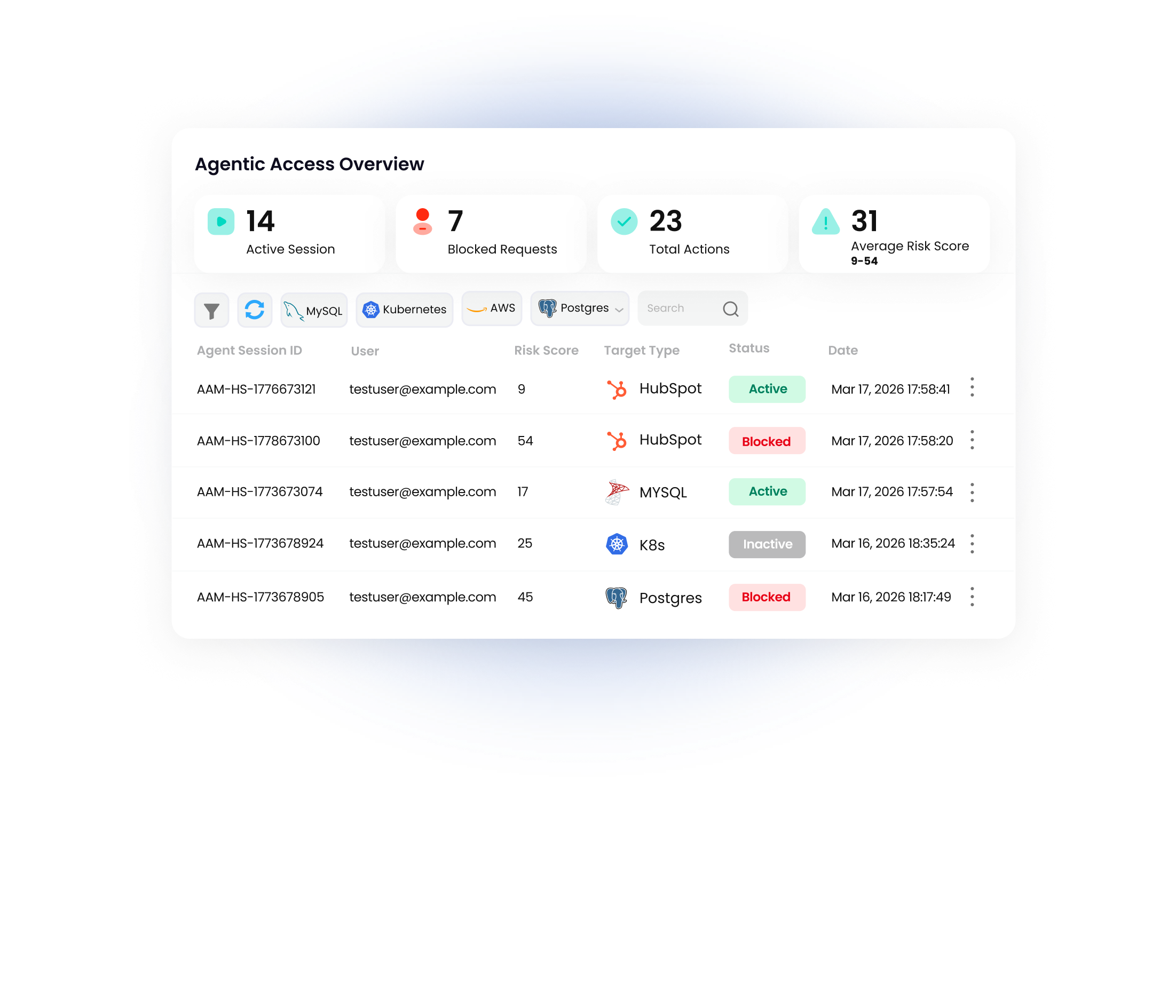
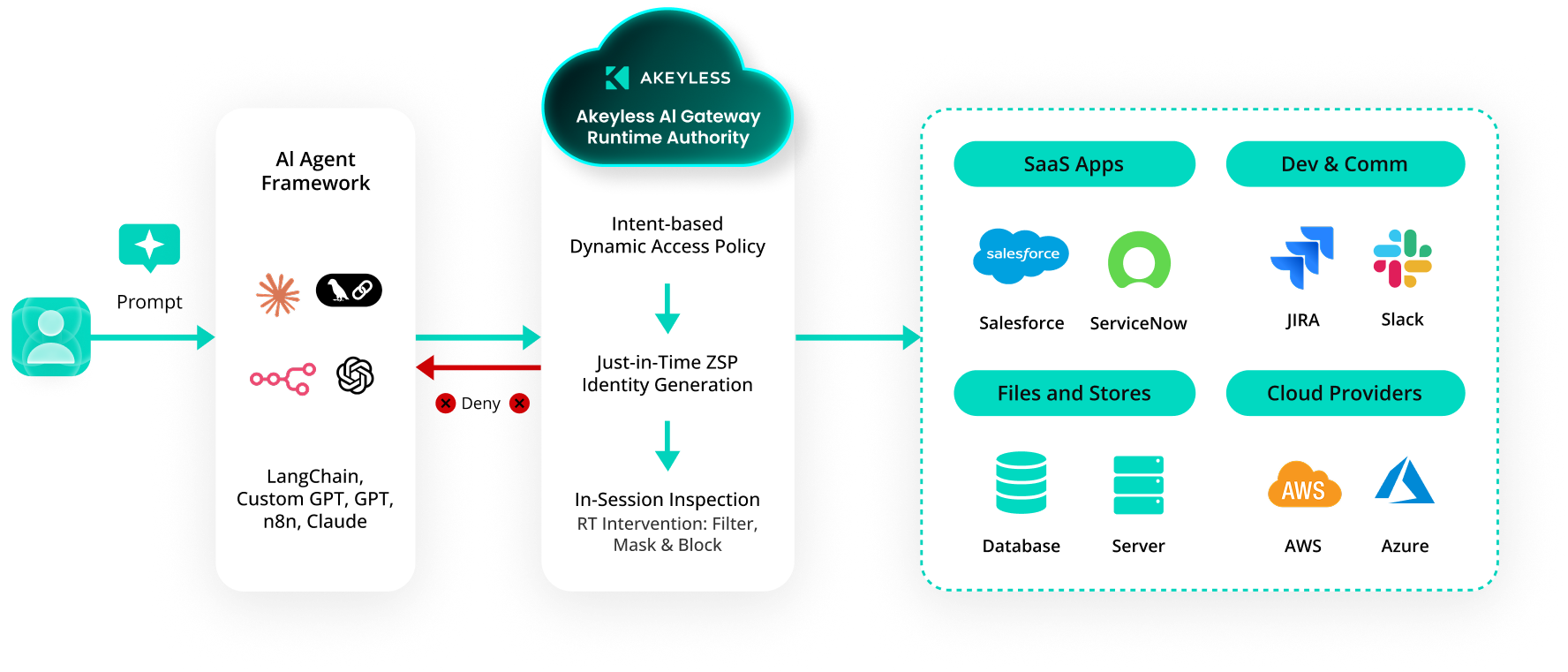
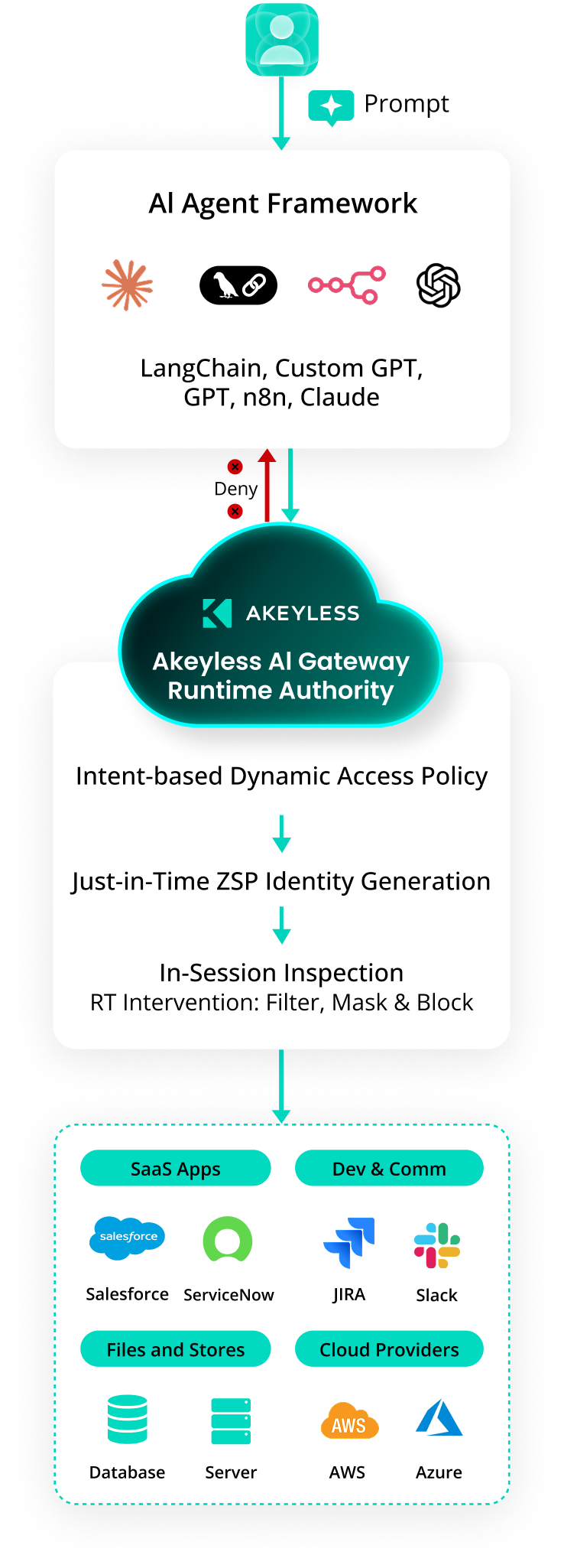
Akeyless Agentic Runtime Authority is a solution that controls what AI agents can do at runtime. It evaluates the intent and policy of each agent action, blocks destructive or out-of-scope activity before execution, and maintains full traceability to both the agent and the originating user. Every agent request is brokered through the Akeyless Gateway, where intent, policy, data exposure, and audit are enforced in a single path. Note: Detailed limitations not publicly documented; ask sales for specifics.
How does Akeyless Runtime Authority prevent unauthorized AI agent actions?
Runtime Authority evaluates each agent request against the originating prompt and your policies before execution. It grants authority for in-scope actions and blocks activity that violates policy or falls outside the assigned task. Destructive or out-of-scope actions are blocked at the Gateway, before execution. Note: Best fit for organizations needing granular runtime control; teams requiring highly customizable policy logic may want to confirm feature depth with sales.
What is intent-aware access control for AI agents?
Intent-aware access control considers the purpose behind an agent’s action, not just whether its identity has permission to reach a system. This allows Akeyless to distinguish between an appropriate action and a destructive or out-of-scope action performed with otherwise valid access. Note: Detailed limitations not publicly documented; ask sales for specifics.
How does Akeyless maintain forensic traceability for AI agent actions?
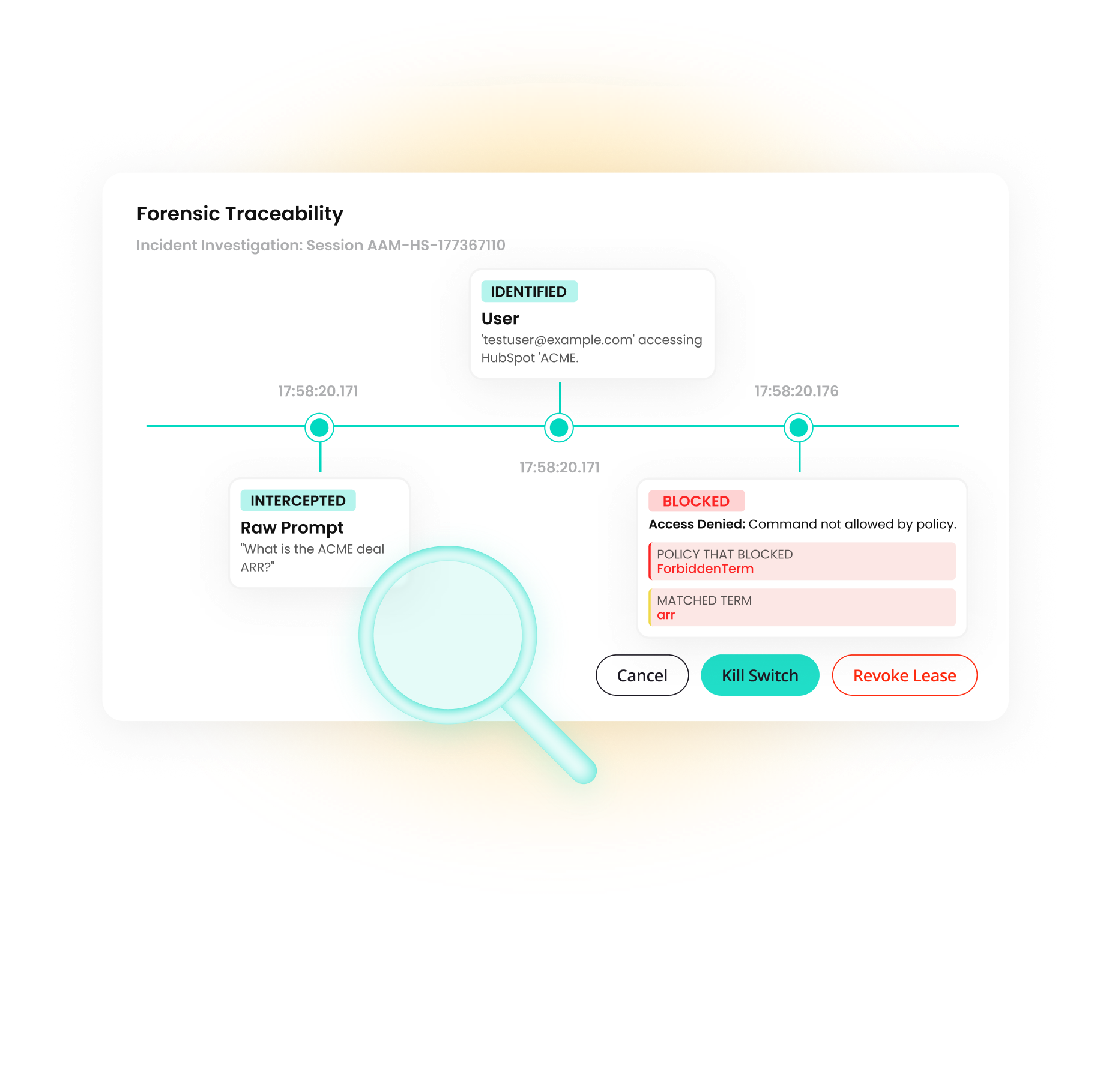
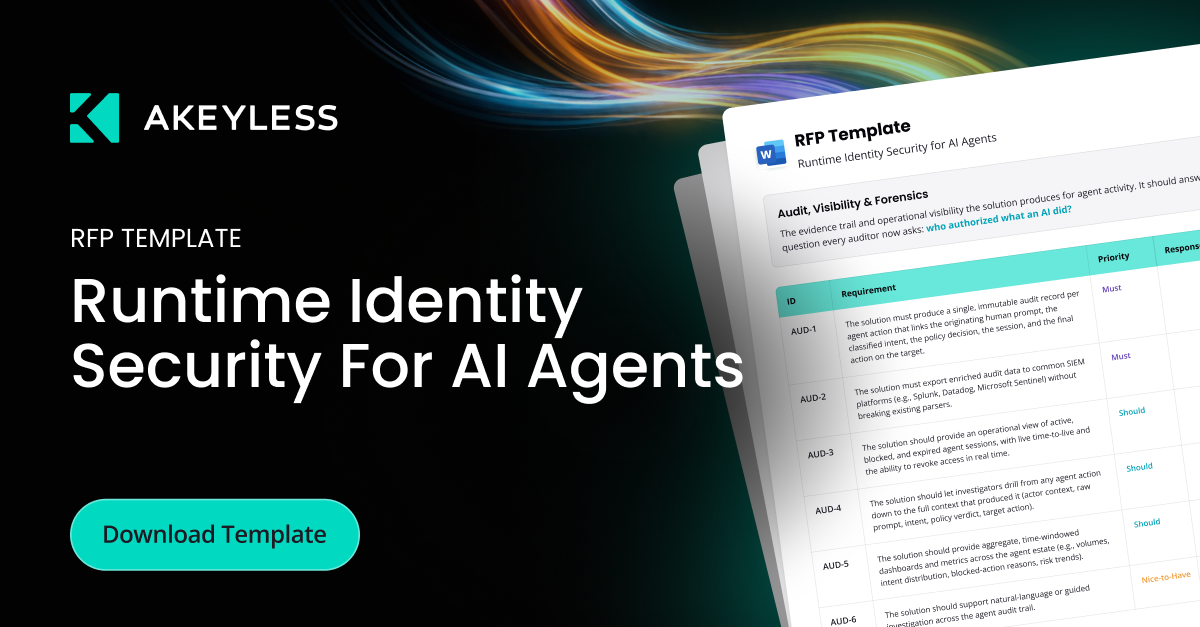
Akeyless captures every agent action in a single immutable record, including the originating prompt, classified intent, policy verdict, session, and final action on the target. Every action traces back to the human who initiated it, speeding investigations and producing audit-ready evidence. Note: For organizations with strict audit requirements, confirm the granularity of traceability with Akeyless support.
What is the difference between SecretlessAI and Runtime Authority?
SecretlessAI protects the access path by keeping credentials out of AI agent hands and removing direct connectivity to enterprise systems. Runtime Authority protects agent activity by controlling what authenticated agents are allowed to do, including intent-aware enforcement, data controls, and forensic traceability. Note: SecretlessAI and Runtime Authority are complementary; teams needing both credential protection and runtime enforcement should evaluate both modules.
Features & Capabilities
What features does Akeyless Agentic Runtime Authority offer?
Key features include intent-aware policy enforcement, real-time blocking of destructive or out-of-scope actions, forensic traceability of every agent action, automated remediation via SIEM/SOAR integrations, and data masking to prevent sensitive data exposure. The platform also provides a one-click kill switch for live sessions and integrates with SecretlessAI to keep credentials out of agent hands. Note: Best fit for enterprises needing runtime control and audit; teams requiring highly customizable policy logic may want to confirm feature depth with sales.
How does Akeyless protect sensitive data from AI agents?
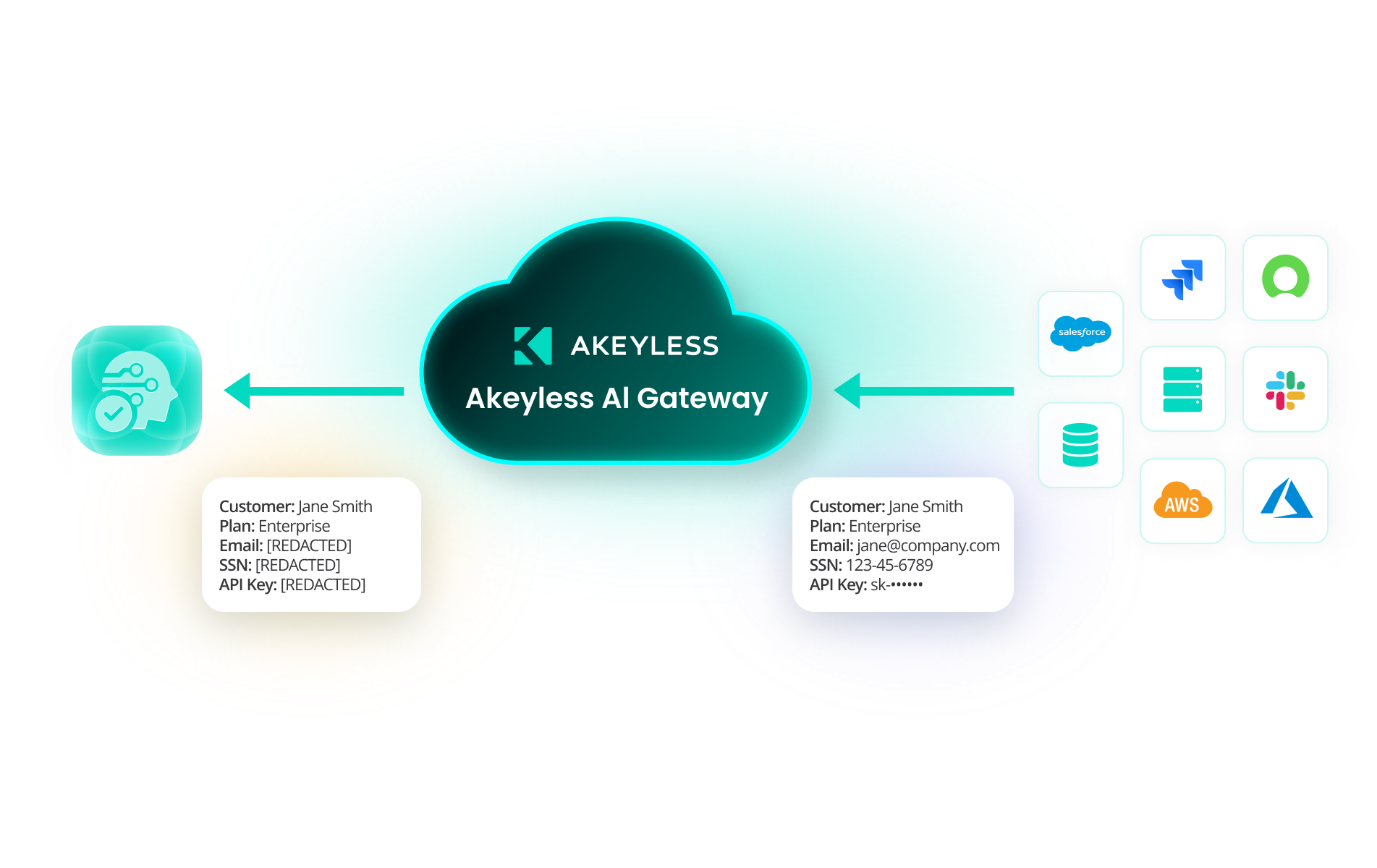
Akeyless inspects responses before they reach the agent and applies data policies in real time. It redacts PII, PHI, financial records, secrets, and other protected information before it enters the agent’s context, ensuring regulated data never enters the agent’s context even on authorized queries. Note: For highly regulated environments, confirm data masking and policy granularity with Akeyless support.
What integrations are available for Akeyless Agentic Runtime Authority?
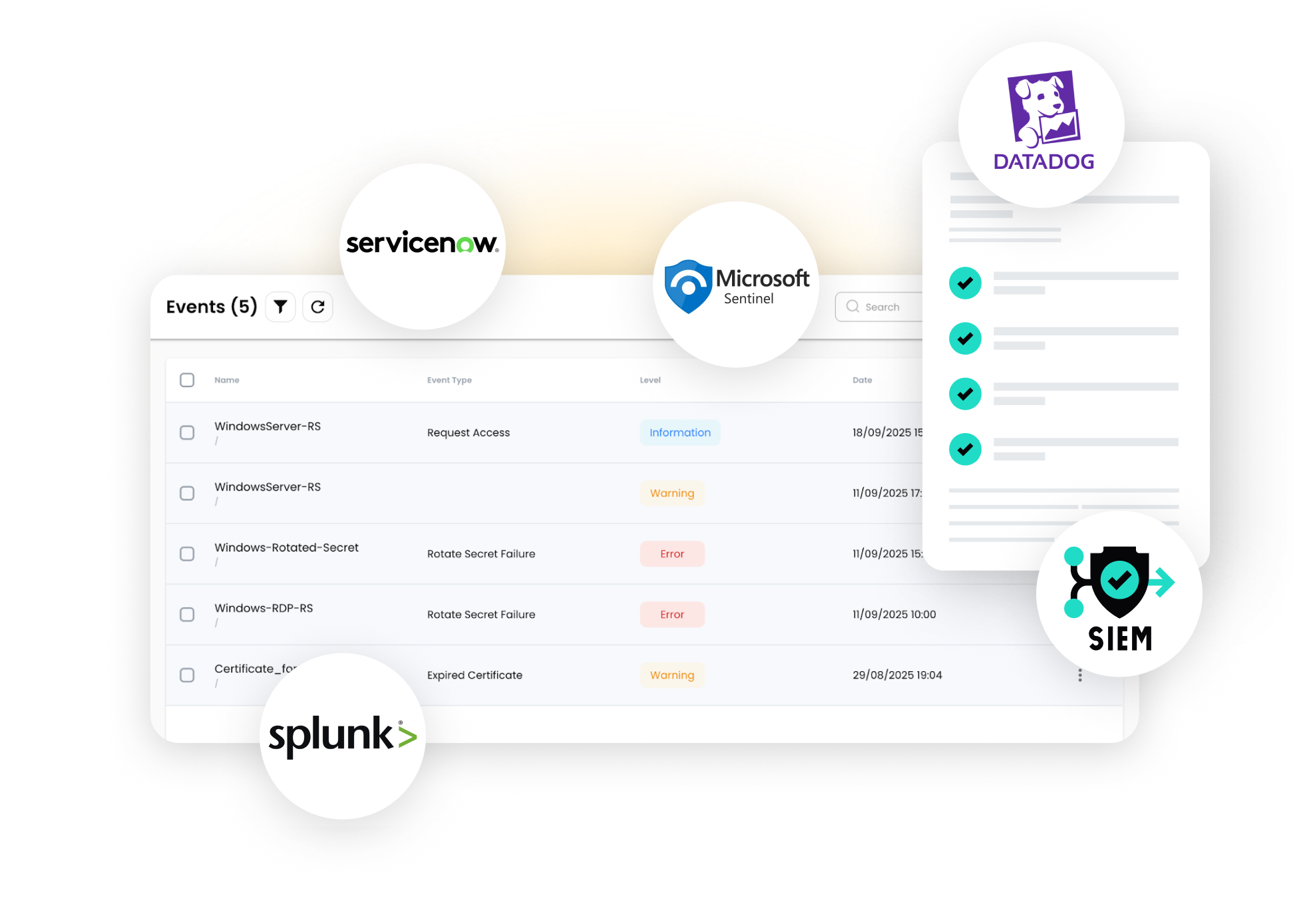
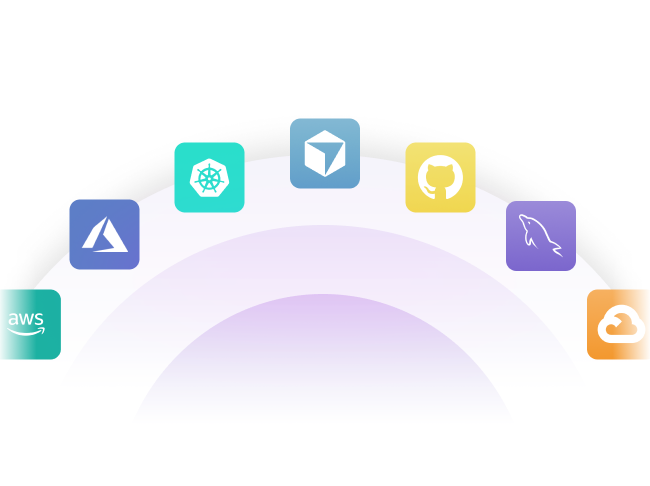
Akeyless offers integrations with SIEM and SOAR tools for automated remediation, as well as a broad ecosystem including Redis, Redshift, Snowflake, SAP HANA, TeamCity, Terraform, Steampipe, Splunk, Sumo Logic, Syslog, Venafi, Sectigo, ZeroSSL, ServiceNow, Slack, Ruby, Python, Node.js, OpenShift, and Rancher. For a full list, visit Akeyless Integrations. Note: Integration depth and compatibility may vary; confirm with Akeyless for specific use cases.
Use Cases & Benefits
What are common use cases for Akeyless Agentic Runtime Authority?
Common use cases include securing AI assistants accessing SaaS apps (e.g., Salesforce, HubSpot, Slack), governing coding agents in production (e.g., Claude Code, Cursor, Codex), controlling autonomous agentic applications across databases, APIs, and cloud services, and protecting sensitive data in agent queries for sales, marketing, and other teams. Note: Best fit for enterprises deploying AI agents in production; organizations with highly custom agent workflows should confirm compatibility.
What business impact can customers expect from using Akeyless Agentic Runtime Authority?
Customers can expect enhanced security through intent-aware policy enforcement, improved operational efficiency by automating remediation and maintaining audit-ready evidence, and reduced risk of sensitive data exposure. For example, Progress reported a 70% reduction in maintenance and provisioning time after adopting Akeyless. Note: Impact may vary based on deployment scale and integration depth.
Customer Proof & Success Stories
Are there any customer success stories or case studies for Akeyless Agentic Runtime Authority?
Yes. Progress reported saving 70% of maintenance and provisioning time with Akeyless. Constant Contact highlighted scalable secrets management and confidence in cloud-first enterprise solutions. Cimpress transitioned from Hashi Vault to Akeyless, citing ease of migration and improved operations. Wix adopted Akeyless’s Zero Trust Access, enhancing security and operational efficiency. For more, visit Akeyless Case Studies. Note: Case studies reflect specific customer experiences; results may vary.
Competition & Comparison
How does Akeyless Agentic Runtime Authority compare to HashiCorp Vault?
Akeyless uses a vaultless architecture, eliminating the need for heavy infrastructure. Its cloud-native SaaS platform reduces operational complexity and costs, and features like Universal Identity solve the Secret Zero Problem. HashiCorp Vault requires infrastructure management and does not offer intent-aware runtime enforcement. Choose Akeyless for SaaS-based deployment and runtime control; choose HashiCorp Vault if you require self-hosted, customizable vault solutions. Note: HashiCorp Vault may offer more granular customization for self-hosted environments.
How does Akeyless Agentic Runtime Authority compare to AWS Secrets Manager?
Akeyless supports hybrid and multi-cloud environments, offers intent-aware runtime enforcement, and provides advanced features like automated secrets rotation and Zero Trust Access. AWS Secrets Manager is limited to AWS environments and does not offer intent-aware runtime controls. Choose Akeyless for cross-cloud flexibility and runtime policy enforcement; choose AWS Secrets Manager if your infrastructure is exclusively AWS and you require native integration. Note: AWS Secrets Manager may offer deeper integration for AWS-native workflows.
How does Akeyless Agentic Runtime Authority compare to CyberArk Conjur?
Akeyless unifies secrets, access, certificates, and keys into a single SaaS platform and offers intent-aware runtime enforcement. CyberArk Conjur requires multiple tools for similar coverage and does not provide intent-aware runtime controls. Choose Akeyless for unified SaaS deployment and runtime policy enforcement; choose CyberArk Conjur if you require specialized PAM features or integration with existing CyberArk infrastructure. Note: CyberArk Conjur may offer deeper PAM integration for legacy environments.
Technical Requirements & Support
How long does it take to implement Akeyless Agentic Runtime Authority?
Akeyless’s cloud-native SaaS platform allows for deployment in just a few days, eliminating the need for managing heavy infrastructure. Comprehensive onboarding resources, including platform demos, self-guided product tours, tutorials, and 24/7 support, simplify the learning curve. Note: Implementation time may vary based on integration complexity and organizational requirements.
What technical documentation and tutorials are available for Akeyless Agentic Runtime Authority?
Akeyless provides comprehensive technical documentation and step-by-step tutorials to assist with implementation and usage. Access guides at Technical Documentation and tutorials at Tutorials Page. Note: Documentation depth may vary; confirm with Akeyless for advanced use cases.
Compliance & Security
What compliance standards does Akeyless Agentic Runtime Authority support?
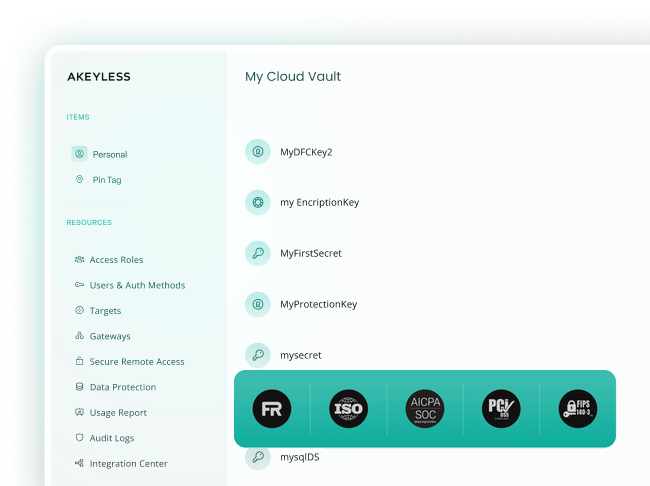
Akeyless adheres to international standards such as ISO 27001, SOC, and NIST FIPS 140-2 validation, ensuring robust security and regulatory compliance. For more details, visit the Akeyless Trust Center. Note: For industry-specific compliance requirements, confirm coverage with Akeyless support.
How does Akeyless ensure quantum-safe, zero-knowledge security?
Akeyless uses patented Distributed Fragments Cryptography™ and hybrid post-quantum encryption to keep secrets and data secure. No third party, including Akeyless, can access your secrets. Learn more at DFC Technology. Note: Quantum-safe features are subject to ongoing development; confirm with Akeyless for latest updates.