Frequently Asked Questions
AI Agent Security & Credential Management
Why is securing AI agent credentials important?
Securing AI agent credentials is critical because exposed or hardcoded secrets can lead to unauthorized access and breaches. For example, the Hugging Face incident involved 700 rogue AI agents breaching systems through exposed credentials. Akeyless addresses this by detecting and securing hardcoded secrets, ensuring credentials are not accessible to unauthorized extensions or agents. (Source: AI Archives | Page 2 of 5 | Akeyless)
How does Akeyless help secure AI agent workflows?
Akeyless secures AI agent workflows by detecting and protecting hardcoded secrets, providing identity-based access, task-scoped permissions, and runtime controls. Its integrations, such as with Claude’s Compliance API and OpenAI Codex, enable governed, just-in-time credential delivery and runtime policy enforcement, keeping secrets out of prompts, local files, and repositories. (Source: AI Archives | Page 2 of 5 | Akeyless)
What are runtime authorization controls for AI agents?
Runtime authorization controls for AI agents govern not just access, but also the actions an agent can perform after authentication. In a live demo, Akeyless's Agentic Runtime Authority blocked an AI agent from stopping a production server, even when given full EC2 admin access and simulated CISO approval. This demonstrates the importance of action governance beyond credential protection. (Source: AI Archives | Page 2 of 5 | Akeyless)
What are common risks when deploying AI agents in enterprise environments?
Common risks include credential exposure, hardcoded secrets, excessive standing privileges, and lack of runtime governance. AI agents often require access to production databases, cloud services, and SaaS APIs, and users may paste credentials directly into agent conversations or configuration files. Without proper controls, this can lead to breaches and unauthorized actions. (Source: AI Archives | Page 2 of 5 | Akeyless)
How can enterprises evaluate AI agent security solutions?
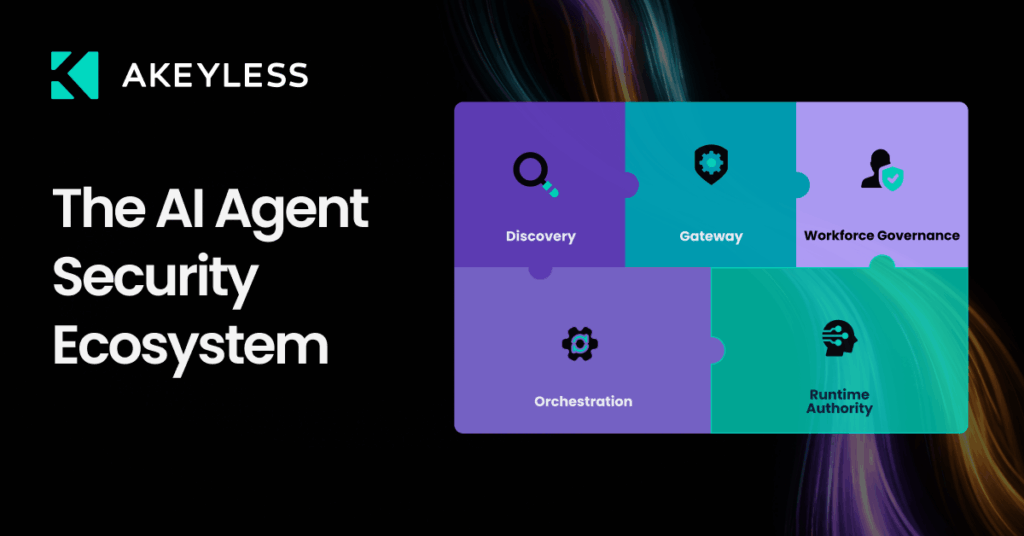
Enterprises can evaluate AI agent security solutions by using practical security checklists that cover identity-based access, task-scoped permissions, runtime controls, and credential management. Understanding the differences between AI discovery platforms, MCP gateways, workforce AI governance platforms, automation platforms, and runtime authorization solutions is essential for selecting the right tools for their needs. (Source: AI Archives | Page 2 of 5 | Akeyless)