Frequently Asked Questions
Secrets Sprawl & Multi-Vault Governance
What is secrets sprawl and why is it a challenge for platform engineering teams?
Secrets sprawl occurs when credentials, API keys, and other secrets are distributed across multiple applications, environments, and teams without consistent management. This often happens as enterprises add new applications, acquire other companies, or expand deployment workflows, leading to multiple secrets stores and copies of credentials. As a result, security teams struggle to track which credentials are still needed and how to revoke them safely, increasing the risk of unauthorized access and operational complexity.
How does multi-vault secrets governance help address secrets sprawl?
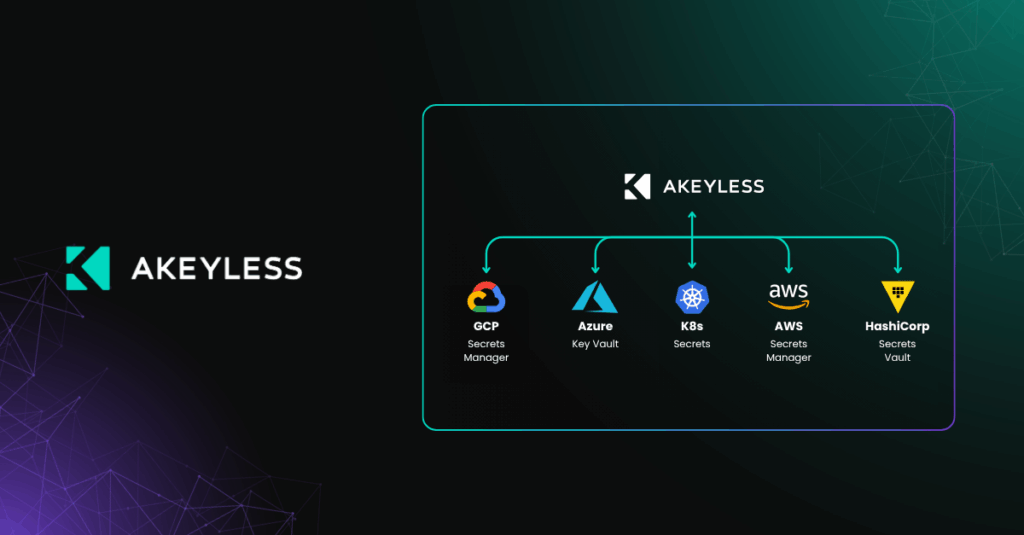
Multi-vault secrets governance provides a unified way to control access, rotation, and audit activity across different secrets managers, such as AWS Secrets Manager, Azure Key Vault, Google Secret Manager, Kubernetes, and HashiCorp Vault. This approach allows organizations to maintain visibility and consistent policies without migrating all secrets into a single store, reducing operational risk and simplifying compliance.
What options does Akeyless offer for secrets migration and consolidation?
Akeyless enables organizations to either unify existing secret stores under a centralized management layer or automate migration into Akeyless when consolidation is needed. The platform connects to systems like AWS Secrets Manager, Azure Key Vault, Google Secret Manager, HashiCorp Vault, and Kubernetes, supporting full multi-vault governance without downtime or custom scripting.
Secrets Management for Cloud-Native Workflows
How does Akeyless support secrets management in Terraform and cloud infrastructure automation?
Akeyless integrates with Terraform to streamline secrets management for cloud infrastructure. It enables secure storage, rotation, and protection of secrets using zero-trust and role-based access controls, reducing the complexity associated with traditional vault-based solutions. This helps platform engineering teams maintain compliance and scalability in Infrastructure-as-Code (IaC) workflows.
What best practices should platform engineering teams follow for managing secrets in hybrid and multi-cloud environments?
Platform engineering teams should centralize secrets management, enforce consistent access policies, automate credential rotation, and use intent-based access controls. Leveraging solutions that support multi-vault governance and integrations with cloud-native tools (like Kubernetes and Terraform) helps maintain security and operational efficiency across hybrid and multi-cloud environments.
Securing Credentials for AI Agents and Modern Workloads
How can platform engineering teams secure credentials for AI agents and automated workloads?
To secure credentials for AI agents, assign each agent a unique identity, limit access to only required systems and actions, and make access short-lived. Apply intent-based access controls at runtime, keep credentials and policy enforcement outside the agent, and revoke access immediately after the task completes. This reduces the risk of credential misuse and supports dynamic, automated environments.