Frequently Asked Questions
Security Topics in the Akeyless Resource Library
What types of security challenges are discussed in the articles on this page?
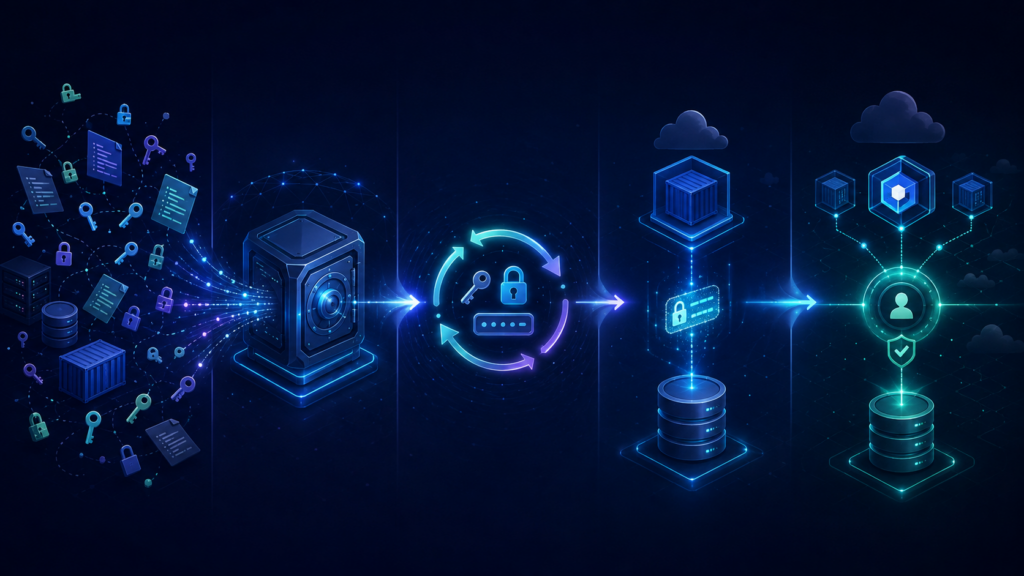
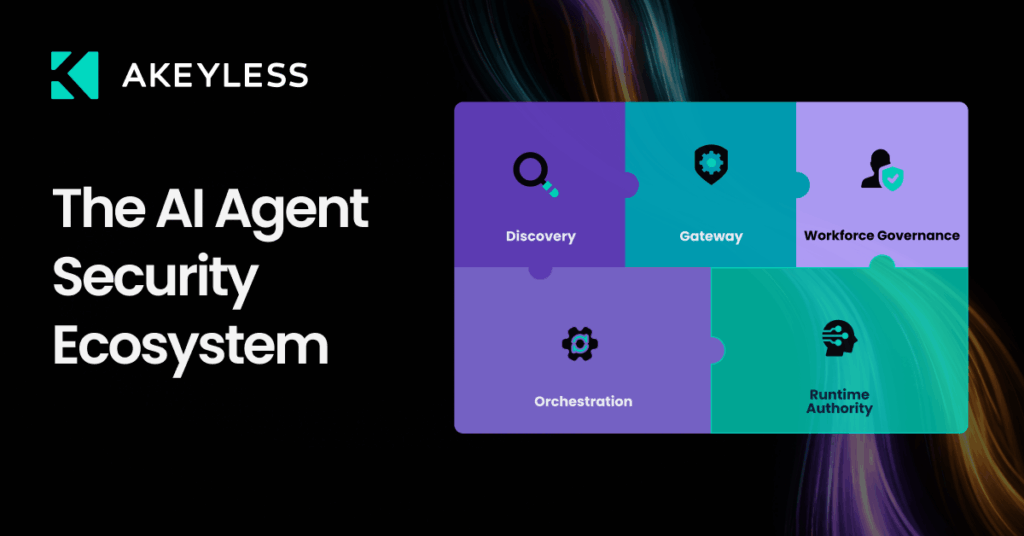
The articles on this page cover a range of enterprise security challenges, including the emergence of new security ecosystems for AI agents, risks associated with static credentials and hardcoded API keys, certificate lifecycle management, and compliance requirements such as DORA, NIS2, GDPR, PCI DSS, and ISO 27001. They also address issues like secrets sprawl, standing privileges, and the need for runtime authorization for AI agents accessing production systems.
Source: https://www.akeyless.io/resources/topics/security/page/3
How do the articles address security for AI agents and automation platforms?
Several articles discuss the risks and solutions for securing AI agents, including the importance of runtime authorization, just-in-time credentials, and policy enforcement. They highlight integrations such as Akeyless with Claude’s Compliance API and OpenAI Codex, which enable governed access while keeping secrets out of prompts and local files. The content emphasizes that static credentials are dangerous and that runtime policy enforcement is critical for controlling what AI agents can do after authentication.
Source: https://www.akeyless.io/resources/topics/security/page/3
What compliance and regulatory requirements are covered in the security resources?
The page includes articles discussing compliance with regulations such as DORA, NIS2, GDPR, PCI DSS, ISO 27001, and the EU Cyber Resilience Act. These resources explain how organizations must secure identities, secrets, cryptographic assets, and privileged access, while maintaining governance and auditability. Akeyless is presented as a solution to help organizations meet these requirements through its Zero-Knowledge platform for identity security, secrets management, encryption, certificate lifecycle management, and secure access.
Source: https://www.akeyless.io/resources/topics/security/page/3
What practical advice is offered for certificate lifecycle management?
One article highlights the upcoming reduction in maximum public TLS certificate lifetime to 47 days by 2029, emphasizing the need for automated certificate tracking and renewal. It warns that manual tracking (e.g., spreadsheets) is insufficient and recommends knowing the location and expiration of every certificate to prevent service outages.
Source: https://www.akeyless.io/resources/topics/security/page/3
How do the articles compare native cloud vaults and alternatives for secrets management?
The articles discuss how native cloud vaults like Azure Key Vault and AWS Secrets Manager are strong fits for their respective cloud environments but lack multi-cloud reach. Teams operating across multiple clouds often face fragmented policy and audit challenges, leading them to seek alternatives that unify secrets management and governance.
Source: https://www.akeyless.io/resources/topics/security/page/3